CASE Study: IKEA North America
Designing kitchens around how people live
scenarioDNA helped IKEA understand how North Americans design and use their kitchens. In-home studies and test kitchens revealed aspirations for openness, flexibility, and more space, informing product design, communication, and retail services.
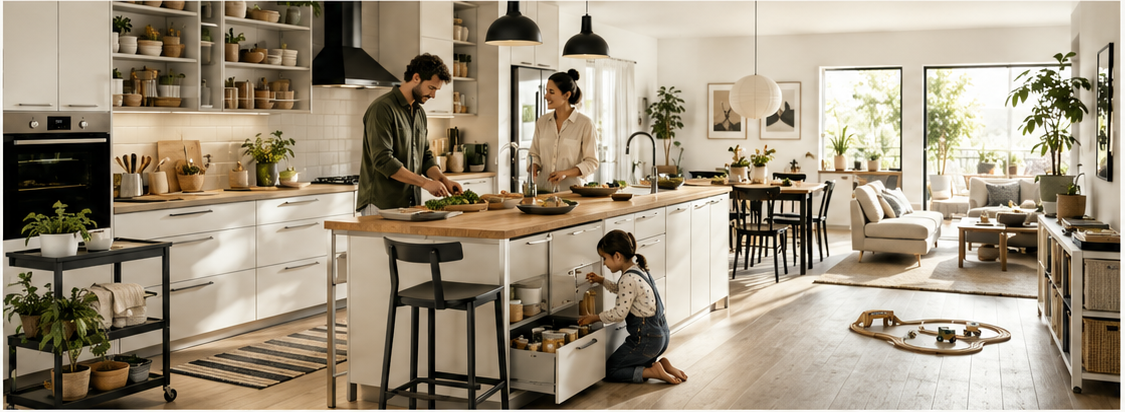
The question: How do kitchens work in everyday life?
IKEA needed to understand how European kitchen designs would fit the ways people lived in North America. The research question went beyond whether people liked a design: how were they actually using their kitchens, and what did they want those spaces to make possible?
The research: Observing use, understanding aspiration
We used in-home studies and test kitchens to connect everyday use with the meanings people attached to kitchen space. Across the research, consistent aspirations emerged for kitchens that felt more open, more flexible, and more spacious. These findings gave IKEA a cultural context for interpreting practical design needs.
The application: Connecting local needs to global design
We translated the findings into actionable guidance for global product design. The work also connected the cultural meanings of the kitchen to communication and retail service design, helping IKEA align European design decisions with North American needs. It gave the team a clearer basis for deciding how design, messaging, and service could work together.
Explore our approach: Culture Mapping · Cultural Research & Intelligence