Cultural Research & Intelligence
We turn cultural evidence into decision systems.
Our framework reveals how meaning is organized and changing. Our AI-powered StoryEngine makes that framework portable, so teams can apply the same logic across questions, markets, and environments.
-
Distinguish signals from broader shifts by examining the codes, behaviors, and tensions around them.
-
Understand how language, symbols, beliefs, and cultural codes migrate across people, institutions, and contexts.
-
Compare plausible readings rather than forcing ambiguous evidence into a single trend narrative.
-
Examine relationships among actors, narratives, behaviors, technologies, and institutions as they respond to change.
-
Translate cultural analysis into strategy, innovation, communication, design, and foresight.
-
01 Custom Research: Structured cultural analysis and experimentation.
02 StoryEngine + Skills: Portable application inside client AI environments.
03 Ongoing Intelligence: Continuous signal monitoring and interpretation.
04 Workshops: Internal capability and methodological adoption.
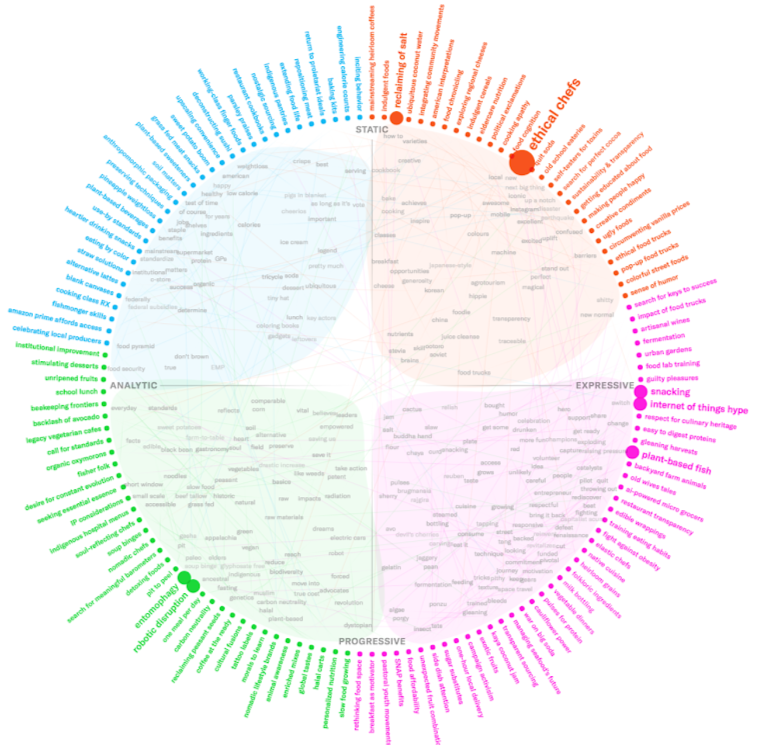
StoryEngine Sandbox brings scenarioDNA’s Culture Mapping and strategic foresight methods into an AI-assisted intelligence environment with nine specialist assistants. Researchers can investigate cultural signals, decode emerging meanings, challenge assumptions, and explore possible futures through a connected process that builds on each stage of analysis.
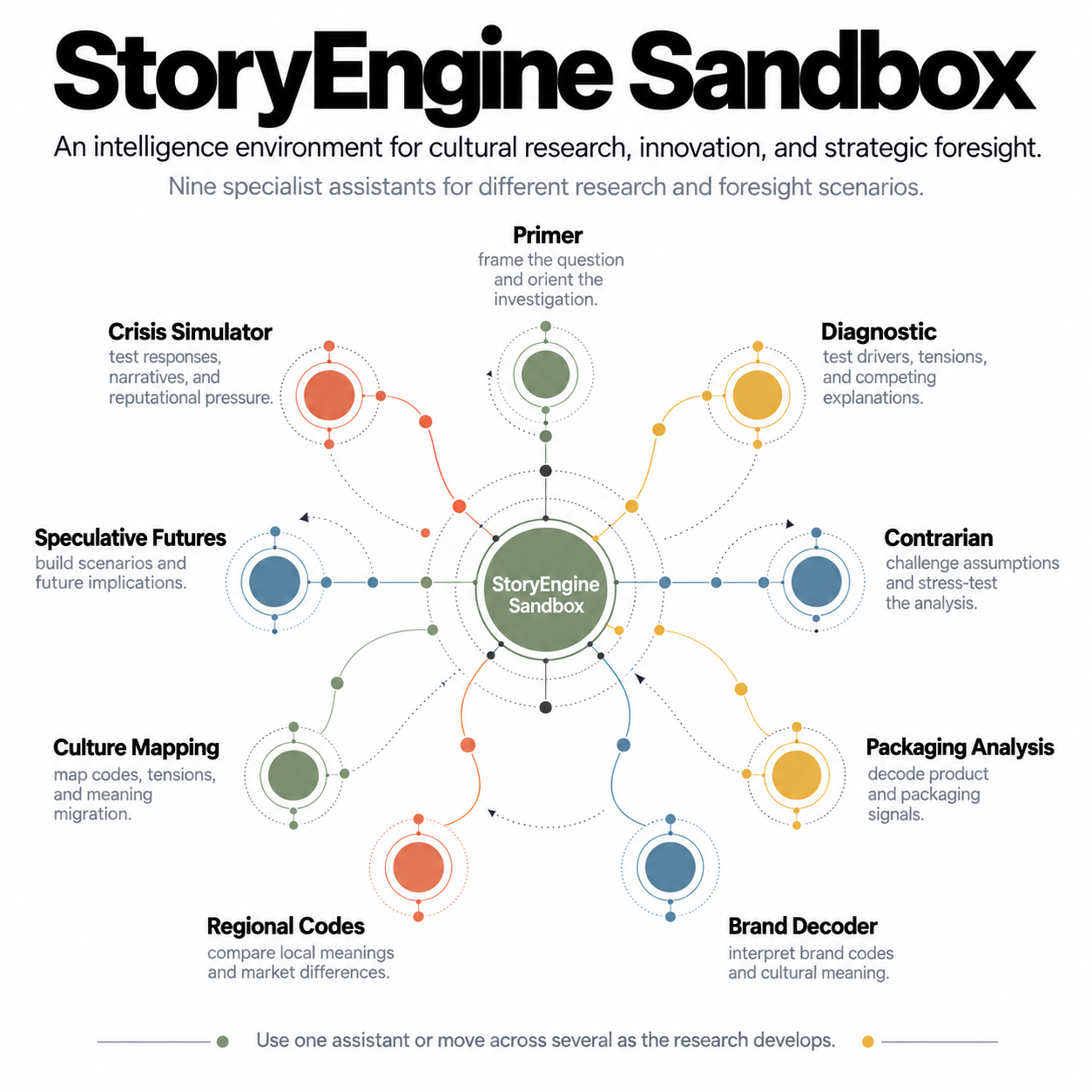
Updated Custom Skills for ChatGPT Plus, Claude, and Perplexity Computer connect StoryEngine to a more efficient research workflow. Start with a question, and the skill guides you through StoryEngine's specialist assistants, helping you develop and test cultural insights without navigating menus or managing each step yourself. You can work manually by copying prompts between tools, or use Codex to coordinate multiple assistants. Along the way, you can add your own research, internal data, and competing evidence to challenge assumptions and refine your analysis. StoryEngine provides the structure while you direct the inquiry, keeping your research focused as cultural conditions change. StoryEngine also remains available as a standalone platform. All subscribers receive access to the integration skills.
Cultural intelligence begins with interpretation. Founded by Tim Stock and Marie Lena Tupot, scenarioDNA leads the application of cultural analysis and applied semiotics to generative intelligence models.

Tim Stock | Co-founder & Partner
Tim has spent more than 30 years developing methods for understanding and anticipating cultural change. His work combines cultural semiotics, machine learning, social science, and strategic foresight to identify the codes, narratives, and behavioral patterns shaping markets and institutions. He is co-author of Story Systems and Cultural Research and co-inventor of scenarioDNA’s patented culture-mapping methodology. His current research examines how artificial intelligence can extend cultural analysis without separating patterns from their social and historical contexts. He is an Associate Teaching Professor at Parsons School of Design and a Global Community Professor at the Center for Future Studies at Universidad de Monterrey.
Marie Lena Tupot | Co-founder & Partner
Marie studies how language, subcultures, and digital communities register changes in identity, dissent, and belonging. Her work uses information science and computational linguistic analysis to distinguish lived shifts in meaning from the aesthetic recycling of older movements. Her recent research traces punk discourse across cyberpunk, cypherpunk, anarchist, anarcho-capitalist, and cryptopunk communities, identifying new forms of individualist and influencer rebellion. She holds an MS in Information Science from the University at Albany’s College of Emergency Preparedness, Homeland Security and Cybersecurity.